 8-inch 800x600 TFT LCD Display With RGB Interface IPS Panel Now Available!
 English
 简体中文
简体中文
 日本語
日本語 Deutsch
 한국어
한국어 Русский язык
 Español
 Français




Designing and Sourcing the Perfect Custom Touch Panel for Your Device
 2026-03-24
 1360
1360


2026-03-24
1360
For product design engineers and manufacturers, a Custom Touch Panel solution is the optimal way to meet unique application requirements. Choosing us as your touch display manufacturer means you gain full support from our experienced engineering team, who are dedicated to bringing your vision to life.
When you partner with us to develop a Custom Touch Panel, we provide comprehensive tailoring options. You can specify the touch panel type, choosing between capacitive or resistive technology. We customize the material, dimensions, shape, and thickness to fit your exact mechanical requirements. Our services also include precision hole openings, 2D/3D curved surfaces, and a variety of appearance colors with silk-screen printing for logos or icons. For enhanced durability and optics, we offer 3A surface treatments (Anti-glare, Anti-fingerprint, Anti-reflection). Furthermore, we engineer specialized solutions for glove touch and underwater operation. Our glove touch solutions support various glove types, including cotton gloves and plastic/rubber gloves, ensuring reliable performance in industrial, medical, or cold-environment applications.
Our extensive technical expertise ensures excellent performance, even for the most demanding product applications. No matter how complex your project, we deliver a tailored Custom Touch Panel to help your products stand out.
We have officially entered the era of the Human-Machine Interface (HMI), and at the heart of this transformation lies the custom touch panel. In this new age, the way we interact with technology defines our experience—whether we are tapping a smartphone, operating a factory machine, or checking in at a hospital. No longer just a simple screen, the custom touch panel has evolved into the primary bridge between human intent and machine execution, fundamentally reshaping how we live and work.
The rise of the custom touch panel is a direct response to the limitations of the past. For decades, industrial and commercial devices relied on generic displays—rigid, one-size-fits-all components that forced products to adapt around them. But as the HMI era demands more intuitive, more durable, and more intelligent interfaces, the custom touch panel has stepped forward as the definitive solution. It is purpose-built for its environment, engineered for its user, and designed to disappear into the experience—so that all that remains is seamless control.
In manufacturing, the custom touch panel has walked onto the factory floor and transformed how workers interact with complex machinery. Engineers now specify custom touch panel units with glove-touch capability, scratch-resistant glass, and optical bonding that ensures readability even under harsh factory lighting. The result is greater efficiency, fewer errors, and a safer, more intuitive work environment—all driven by the reliability of a rugged custom touch panel.
In healthcare, the custom touch panel has become a silent partner in patient care. Medical devices now feature custom touch panel interfaces that are sealed against fluids, compatible with disinfectants, and optically clear for critical readings. From patient monitors to diagnostic equipment, the custom touch panel ensures that technology supports—rather than complicates—the life-saving work of medical professionals.
In our daily lives, the custom touch panel has slipped seamlessly into the spaces we inhabit. Smart home systems rely on sleek, bezel-free custom touch panel units that blend into walls, controlling lighting, climate, and security with a single tap. Commercial kiosks, point-of-sale systems, and interactive displays all depend on the reliability and responsiveness of a well-engineered custom touch panel. It is how we order food, check in for flights, and navigate public spaces—all through the intuitive interface of a custom touch panel.
The reason for this ubiquity is simple: a custom touch panel is not a generic component. It is a tailored solution. It can be shaped to fit any enclosure, programmed to respond to specific gestures, and fortified to withstand extreme temperatures, moisture, and vibration. Whether it is a rugged custom touch panel guiding a CNC machine or an elegant custom touch panel managing a smart building, the technology adapts to the task—not the other way around.
As we move deeper into the HMI era, the custom touch panel will only grow more essential. It is the point of connection between human and machine, the surface through which commands become actions, and the interface that makes complex technology feel simple. This guide will explore how the custom touch panel is engineered, where it is making the biggest impact, and how you can bring a custom touch panel solution from concept to reality—powering the next generation of products that will shape our world.
Optimized User Experience (UX) and Brand Image: A custom touch panel with a tailored interface design effectively reinforces your brand identity. It gives your device a cohesive, integrated feel—rather than appearing as a mere patchwork of generic, off-the-shelf components. (For example: "Imagine your exclusive logo appearing on the screen of your custom touch panel at startup, or a User Interface (UI) design that aligns perfectly with your device's actual operational workflow.")
Seamless Mechanical Integration: Perfectly embed a custom touch panel into your existing device enclosure. Say goodbye to obtrusive, wide bezels and wasted space; instead, precisely meet the specific IP protection ratings (water and dust resistance standards) required by your unique operating environment by designing the custom touch panel to fit the exact specifications.
Enhanced Functionality and Reliability: By incorporating technologies such as Optical Bonding into your custom touch panel, screen readability in bright light conditions and overall durability can be significantly improved. Furthermore, specialized features—such as glove-friendly touch sensitivity or underwater operability—can be implemented within the custom touch panel according to your specific requirements. You retain complete autonomy, with the freedom to select the exact quality grades for the components that make up your custom touch panel.
Future-Proofing and Long-Term Supply Assurance: Generic, off-the-shelf displays are constantly at risk of sudden discontinuation (known as EOL—End of Life). Partnering with a provider to develop a dedicated custom touch panel, however, ensures supply chain stability and guarantees long-term component availability throughout your product's entire lifecycle.
Cost-Effectiveness at Scale: Although the initial phase may involve NRE (Non-Recurring Engineering) fees for the development of a custom touch panel, these tailored panels often prove to be more cost-effective in the long run—precisely because they eliminate redundant, unnecessary features and streamline the device assembly process.
At its core, a custom touch panel is far more than just a screen with variable dimensions. It is a fully engineered input/output solution, designed and manufactured to meet the precise specifications of a particular application, rather than being a generic, off-the-shelf component. While standard displays often force product designers to compromise, a custom touch panel is built to integrate seamlessly with your vision. This level of personalization extends across multiple critical dimensions .
Hardware Customization: Beyond Size
When we talk about hardware, the possibilities go well beyond simply choosing a diagonal measurement. With a custom touch panel, you define the exact physical attributes of the unit. This includes the shape—whether a standard rectangle or a unique, curved form factor. You specify the thickness of the cover glass or plastic lens to meet durability or aesthetic requirements.
Crucially, hardware customization enables advanced performance features. For example, optical bonding is a process where a clear optical adhesive laminates the cover lens directly to the display sensor. This eliminates the air gap, significantly reducing glare and improving sunlight readability. It also enhances the overall durability of the custom touch panel by making it more resistant to shock and vibration.
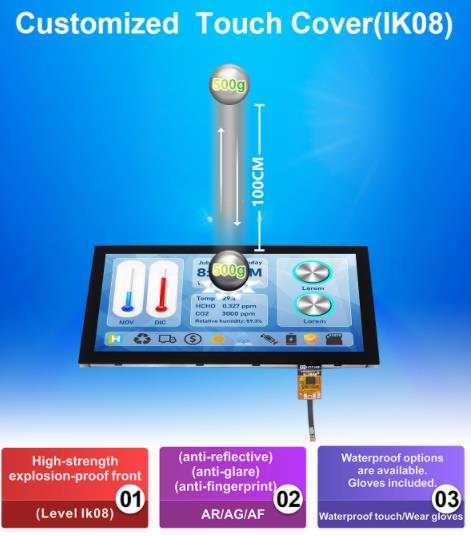
To gain a more intuitive understanding of the impact resistance of our custom touchscreens, please watch the video: Steel Ball Drop Test.
Software and GUI Customization: The User Experience
A custom touch panel is defined as much by its software as its hardware. It allows for a completely tailored Graphical User Interface (GUI). This means you can design a user interface that mirrors the exact workflow of your machine, making it intuitive and efficient. You can integrate your brand logo into the startup sequence, ensuring every interaction reinforces your identity. Furthermore, you can define specific function buttons and unique gesture controls that are purpose-built for your application, simplifying complex tasks for the end-user.
Interface Customization: How It Connects
How your custom touch panel communicates with the main system is a critical aspect of customization. Different applications require different electrical interfaces to ensure seamless data transfer and power management. A custom touch panel can be engineered to support a wide array of industry-standard interfaces, including RGB, LVDS (Low-Voltage Differential Signaling), MIPI (Mobile Industry Processor Interface), HDMI, USB, RS232, and I2C. This flexibility guarantees that your panel will integrate flawlessly with your existing control board or processor.
Mechanical Integration: Fitting Perfectly Into Your World
Finally, a true custom touch panel extends to the mechanical systems that house it. This includes the design of bespoke mounting brackets and enclosures that ensure a perfect fit, eliminating unsightly gaps and simplifying your product's assembly. Critical sealing requirements are also addressed at this level. By designing the mechanical integration from the start, you can achieve a specific IP (Ingress Protection) rating for your device, ensuring it is sealed against dust and water. Whether your product needs to withstand a garden hose (IP65) or full immersion (IP68), a custom touch panel can be built to meet that environmental challenge.
The Concept and Structural Basis of Capacitive Touch Panels
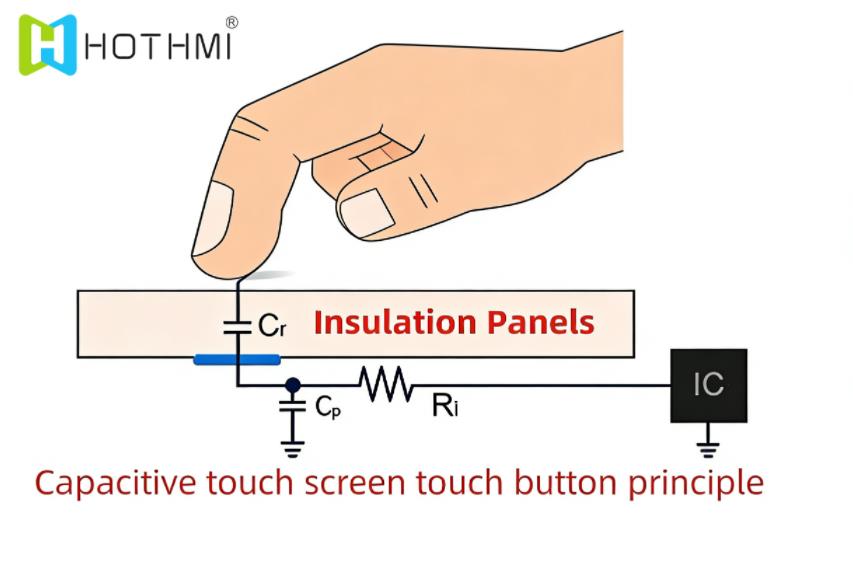
Capacitive touch panels represent a technology that leverages the conductivity of the human body to enable precise interaction. Their operating principle involves the formation of a coupling capacitance between a touching finger and an underlying electrode layer; by detecting the resulting changes in capacitance, the system is able to pinpoint the exact location of the touch. Structurally, the panel consists of the following layers arranged from outermost to innermost: the outermost cover glass, which serves both a protective function and acts as the direct contact surface; an underlying bonding layer used to adhere the sensing layer; the core transparent electrode layer—typically composed of ITO material etched into a regular matrix of X- and Y-axis electrodes—which is supported by a transparent substrate; and finally, the innermost shielding layer, designed to block electromagnetic interference originating from the internal display components, thereby ensuring touch accuracy. For applications requiring a custom touch panel, these structural elements can be tailored—such as adjusting the electrode pattern, cover glass thickness, or bonding materials—to meet specific mechanical, optical, or environmental requirements without compromising the fundamental capacitive sensing mechanism.
The core operating principle of a custom touch panel utilizing capacitive technology is based on projected capacitive principles: when a voltage is applied to the transparent electrode layer situated beneath the screen (typically composed of ITO material) to generate an electric field, a minute coupling capacitance is formed between a conductive object—such as a finger—and the electrodes the moment it touches the screen's cover glass. This interaction alters the capacitance value at that specific location. Integrated circuits positioned at the four corners of the screen continuously scan the matrix formed by the X- and Y-axis electrodes in real time, precisely pinpointing the coordinates of the touch point by detecting these changes in capacitance values—a level of precision that defines a high-performance custom touch panel.
Compared to earlier technologies, capacitive touch offers significant advantages that are essential for any custom touch panel design. First, it supports multi-touch functionality, enabling the recognition of complex gestures—such as pinching and rotating—thereby vastly enriching the dimensions of user interaction. Second, it boasts high sensitivity, responding to even the slightest contact with extremely rapid reaction speeds. Furthermore, given that the cover glass is hard and abrasion-resistant, and the actual touch-sensing layer is completely sealed within the device, the technology is characterized by exceptional durability and strong resistance to external interference. Additionally, it features high light transmittance, ensuring the clarity and sharpness of the screen display. Collectively, these advantages combine to deliver a capacitive touch experience that is fluid, intuitive, and highly reliable.
A custom touch panel based on resistive technology is a thin-film sensing device affixed directly to the surface of a display screen; its core structure is composed of multiple layers of composite materials. In such a custom touch panel, the bottom layer typically utilizes glass or acrylic as a substrate, the upper surface of which is uniformly coated with a layer of transparent conductive material—Indium Tin Oxide (ITO). The upper layer of this custom touch panel consists of a hardened plastic sheet or glass panel; its underside is similarly coated with an ITO conductive layer, while its upper surface undergoes a specialized treatment process to ensure excellent smoothness and scratch resistance. Interspersed between these two conductive layers are numerous minute, transparent insulating spacers, which serve to keep the two layers separated under normal conditions. When a finger or stylus presses against the screen, the upper layer undergoes localized deformation, causing the two ITO conductive layers at that specific point to make contact, thereby generating an electrical signal.
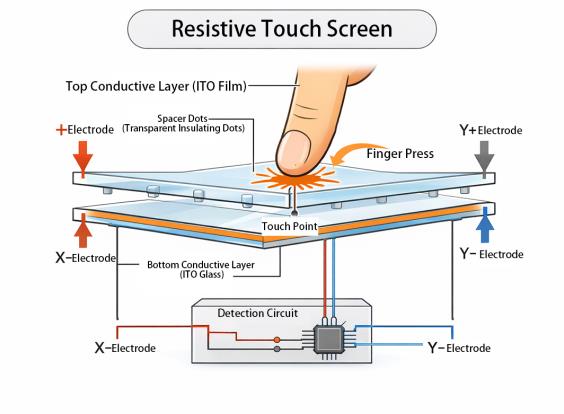
As illustrated in the diagram, the resistive touchscreen employs a dual-layer stacked design. The top layer consists of a flexible ITO conductive film, serving as the movable upper conductor; the bottom layer comprises ITO conductive glass, acting as the fixed substrate. Distributed between these two conductive layers are numerous tiny, transparent insulating spacers, which ensure that the two layers remain separated when the screen is not being pressed. The elements labeled "+Electrode" on the left and right sides of the diagram represent the silver conductive adhesive electrodes to which the driving voltage is applied. Ultimately, the entire structure is connected to a detection circuit responsible for processing the touch signals.
Comparison Items | Resistive Touch Display | Capacitive Touch Display |
Price | Low | Relatively high, special designs can be low |
Multi-touch | No | Support |
Touch gestures | Difficult | Support |
Touch durability | 3H, easy to scratch | Can be up to 9H, not easy to scratch |
Energy consumption | Reduced | Higher |
Touch sensitivity | Low | High (adjustable) |
Touch resolution | High | Relatively low |
Image clarity | Not good | Good |
Touch material | Any kind | Fingers. Can be designed to use other materials such as gloves, stylus, pencils, etc. |
Exposure to water and oil | No design change | Requires special design |
Surface decoration | Difficult | Convenient |
Different shapes | Difficult | Convenient |
Top cover | Can be done | No |
Two-dimensional surface | Difficult | Achievable |
Dimensions | Small and medium | Small to very large sizes |
Harsh environment | Easy | Difficult |
False touch | No | Needs careful calibration |
Functionality | Low | High, shielding must be designed |
Based on the distinctions between the two, we observe that capacitive screens represent an "experience-first" choice, suitable for everyday users who prioritize fluid operation and aesthetics; resistive screens, conversely, embody a "function-first" and "environment-first" approach, making them ideal for professional scenarios requiring precise input—such as when wearing gloves or operating in harsh environments.
Customization Item | Brief Options Description |
Touch Screen Type | Capacitive / Resistive |
Form Customization | Thickness, Shape, Size, Edge Grinding, Hole Drilling |
Material Selection | Glass Type, Conductive Layer Material |
Surface Aesthetics | Cover Color, Silk-screen Logo / Pattern |
3A Surface Treatment | AF (Anti-Fingerprint), AR (Anti-Reflective), AG (Anti-Glare) |
Function Enhancement | Underwater Touch, Glove Touch |
Material type | Features and advantages | Applicable Scenarios | Hardness |
High-alumina silicon tempered glass | High strength and temperature resistance, excellent optical properties | High-end consumer electronics, in-vehicle central control
| 7H-9H
|
Sodium-calcium reinforced glass | Balanced cost and stable performance | Smart home, industrial control | 6H-7H
|
PMMA Acrylic | Highly impact-resistant and easy to process | Children's devices, low-cost solutions | 3H-4H
|
Corning® Gorilla® Glass | Top-tier drop resistance, brand premium | flagship devices | 8H-9H
|
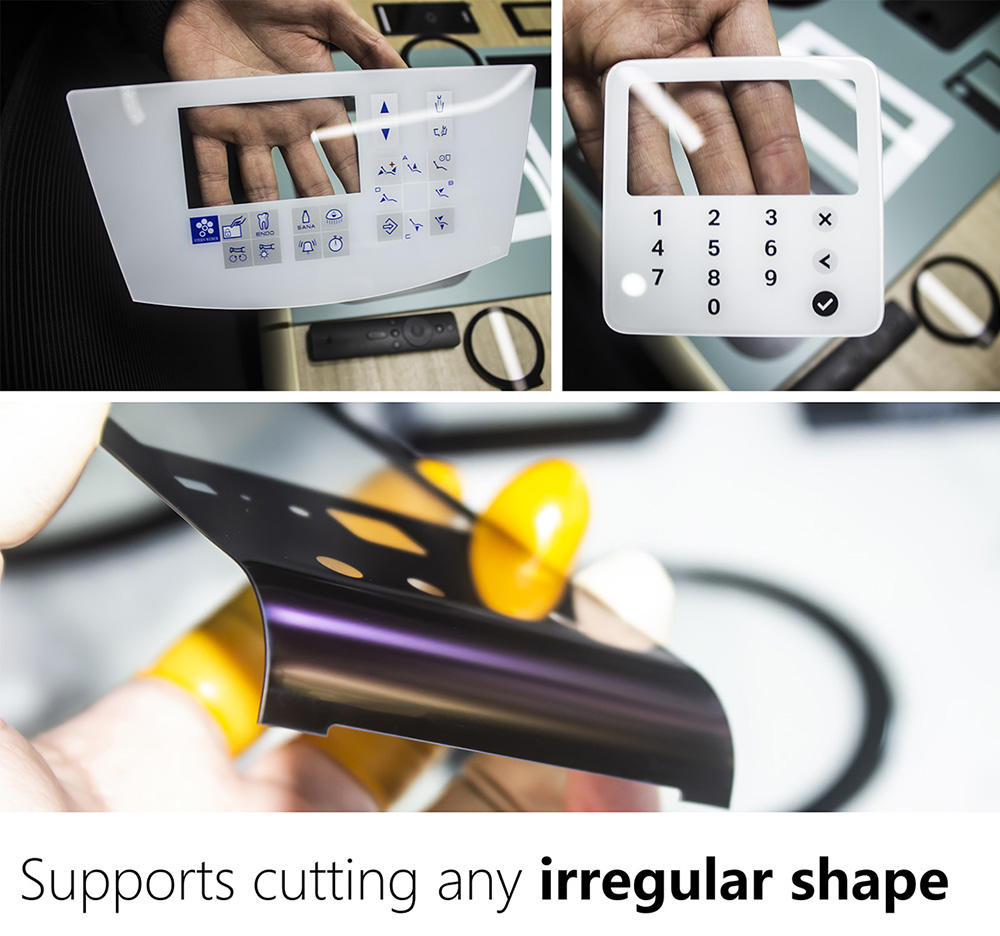
• Irregular Shape Cutting: Supports any irregular shape, with a radius (R) accuracy of ±0.1mm.
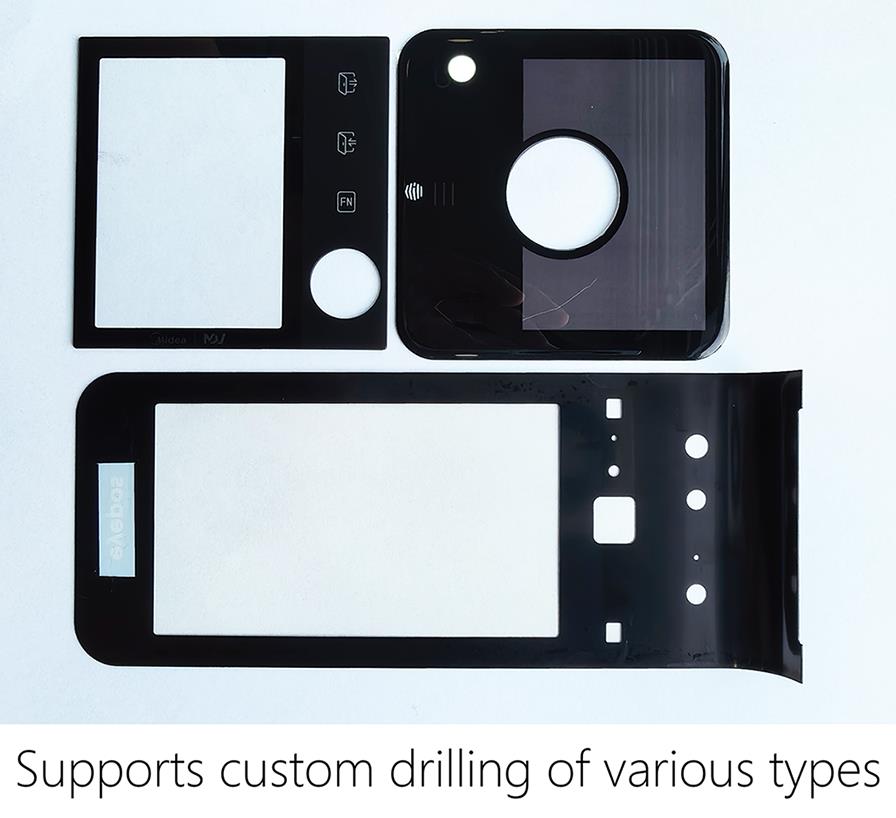
• Precision Hole Fittings: Camera holes, sensor holes, button holes, minimum diameter 0.8mm.
• Thickness Matrix: 0.55/0.7/1.1/1.8/2.0/3.0...10.0mm (full range).
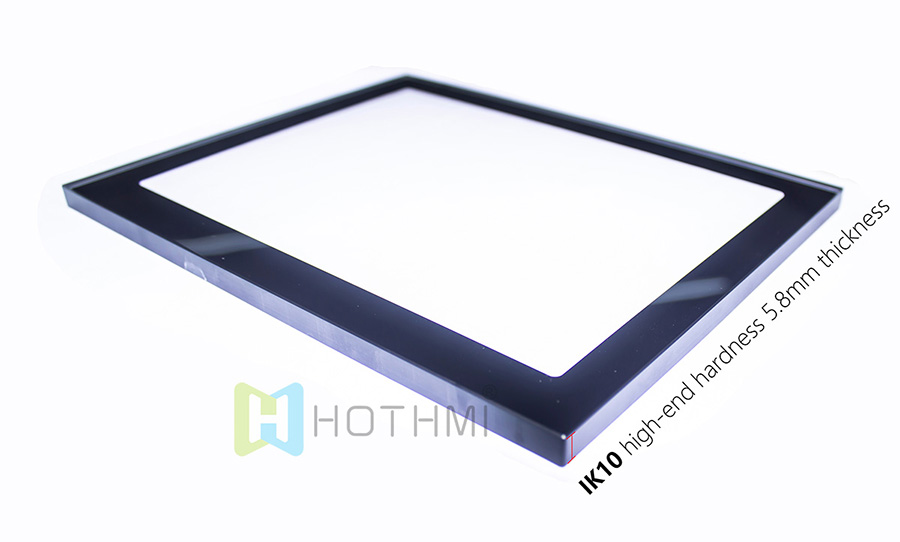
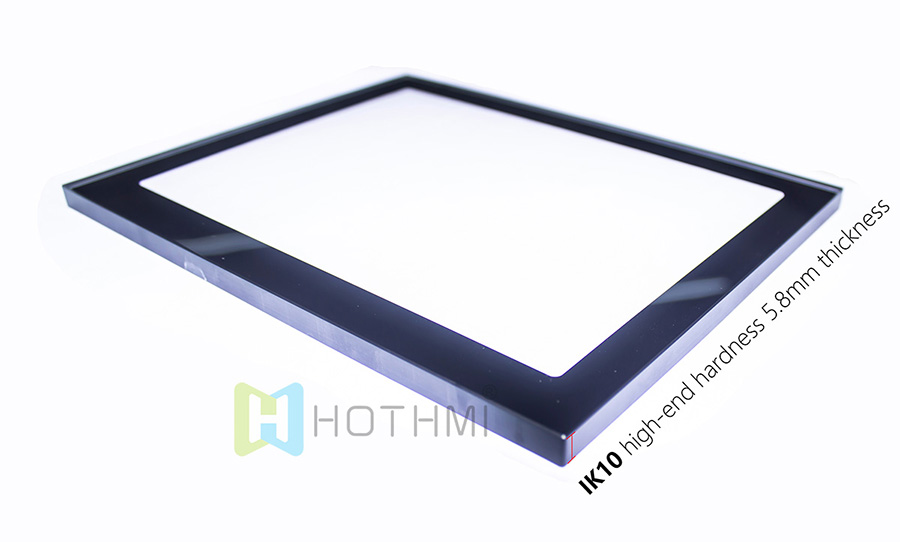
This customized touch panel is 5.8mm thick, offering IK10 protection against external mechanical impacts. It can withstand the impact of a 5kg object falling from a height of 40cm from any direction. Ideal for rugged industrial equipment, heavy outdoor equipment, and vandal protection.
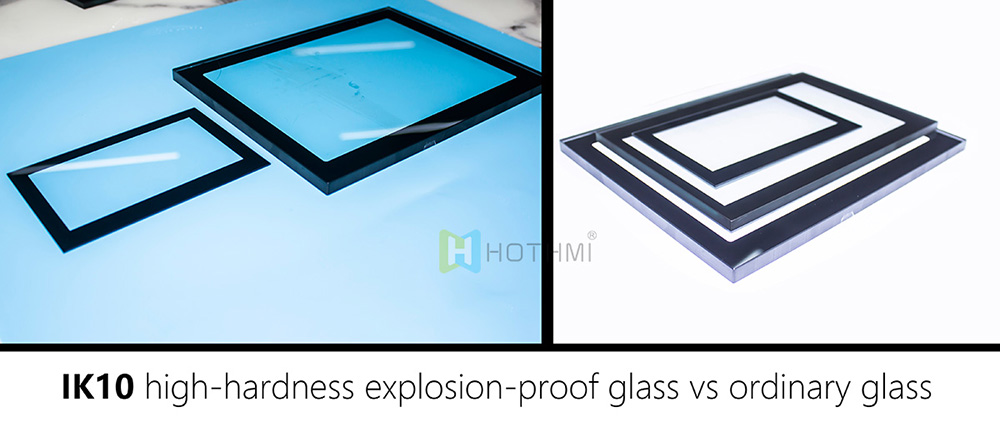
An IK10-rated custom touch panel is engineered for maximum impact resistance, certified to withstand a 20-joule impact (equivalent to a 5kg weight dropped from 40cm). In contrast, ordinary panels offer minimal or no rated protection against mechanical shock.
• Edge Finishing: Straight edges, 2.5D curved edges (optimal grip), 3D curved surfaces (unbounded visual experience).
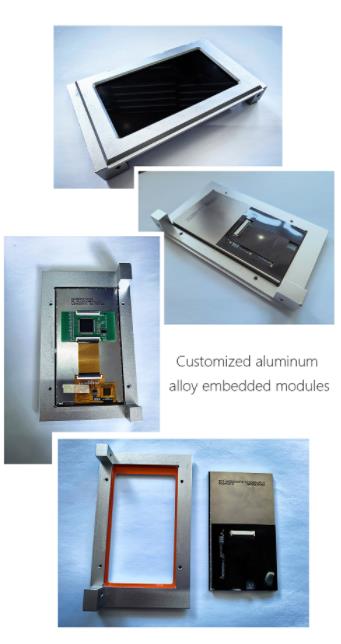
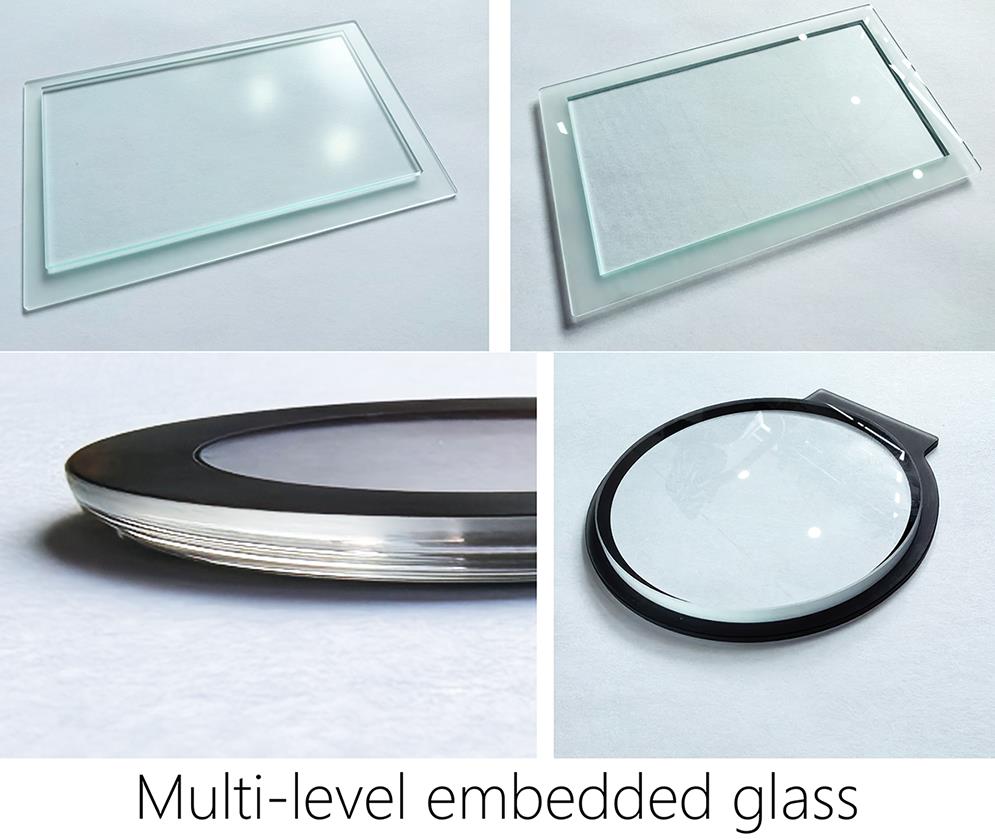
l Multi-layered embedded glass custom touch panel:The 1.customized touch panel is layered according to the product's structure, so that the entire cover can fit seamlessly with the display screen. The integrated cover, by processing the different sizes of the layers, makes the structure more beautiful and the overall integrity stronger.
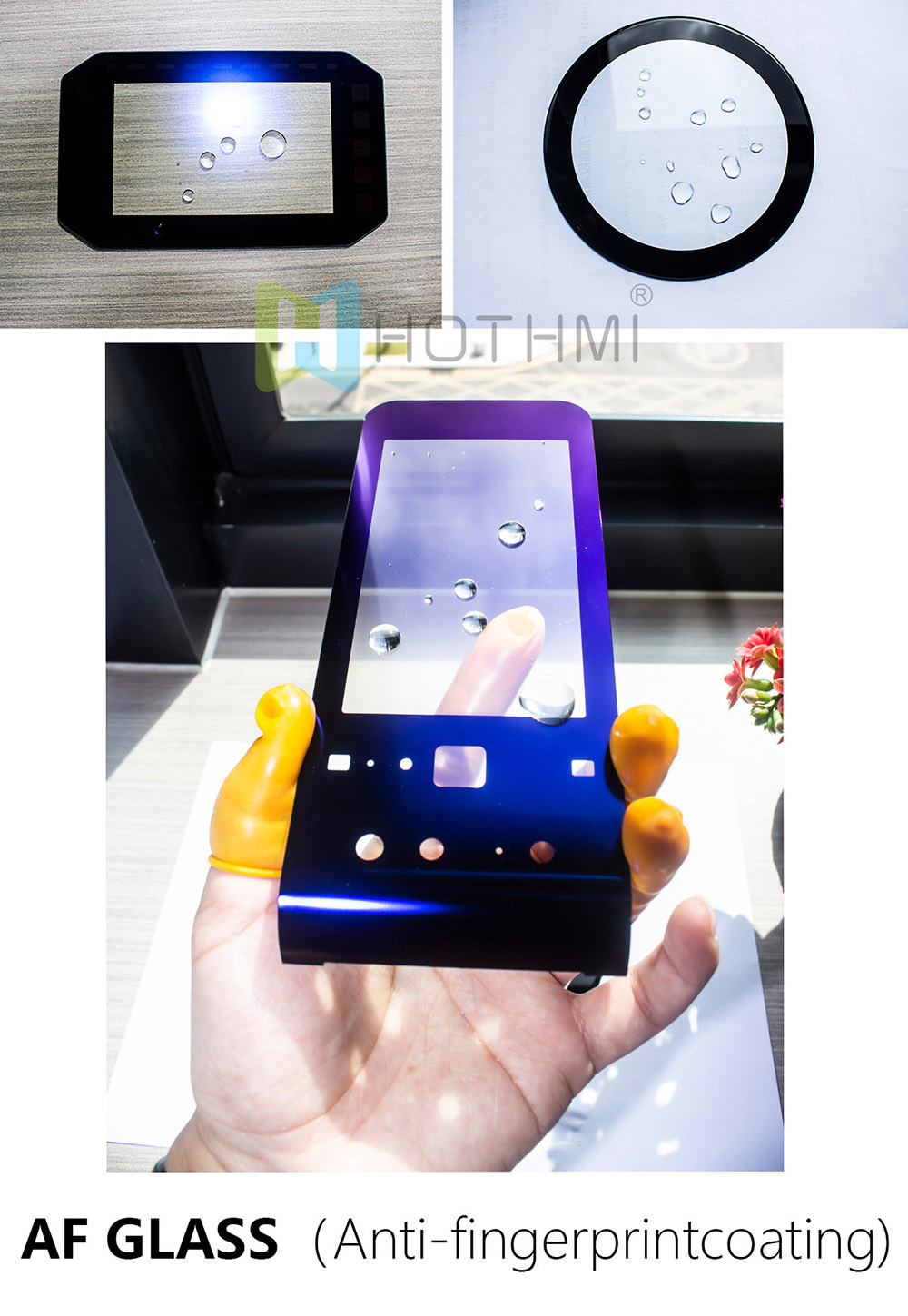
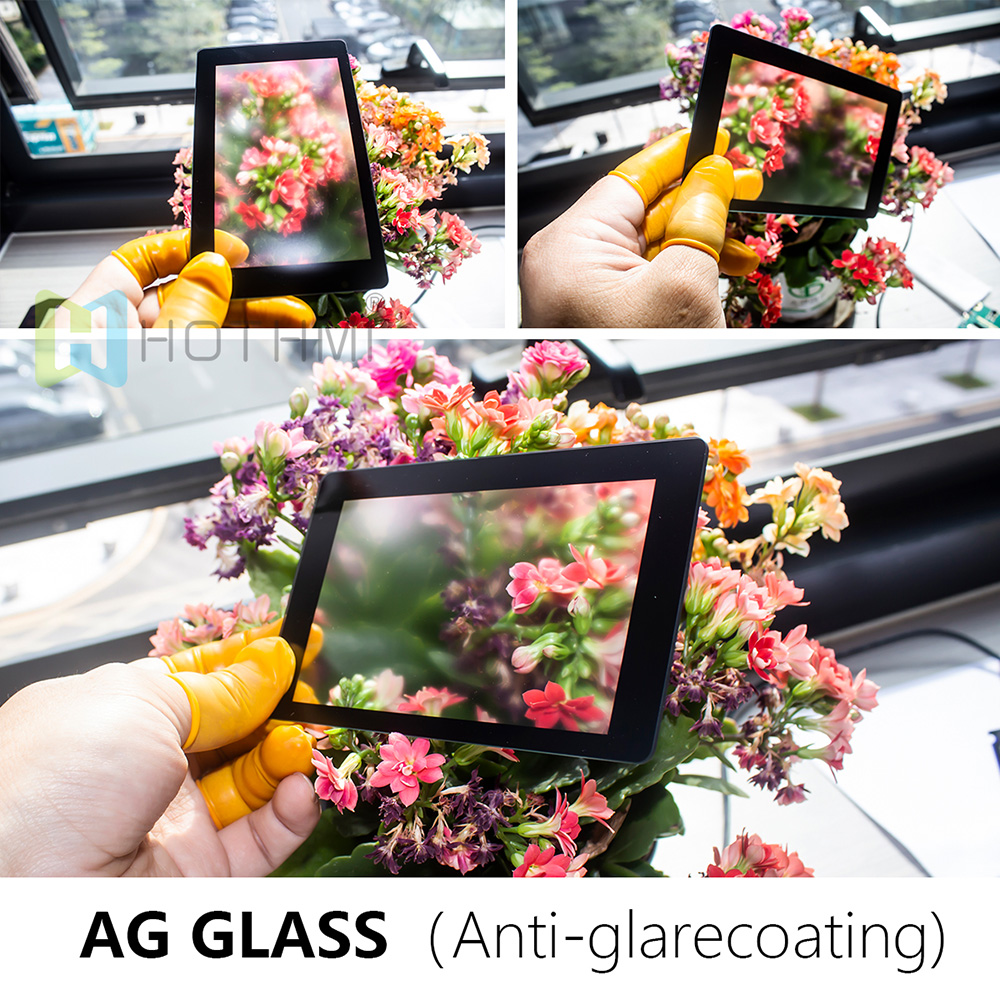
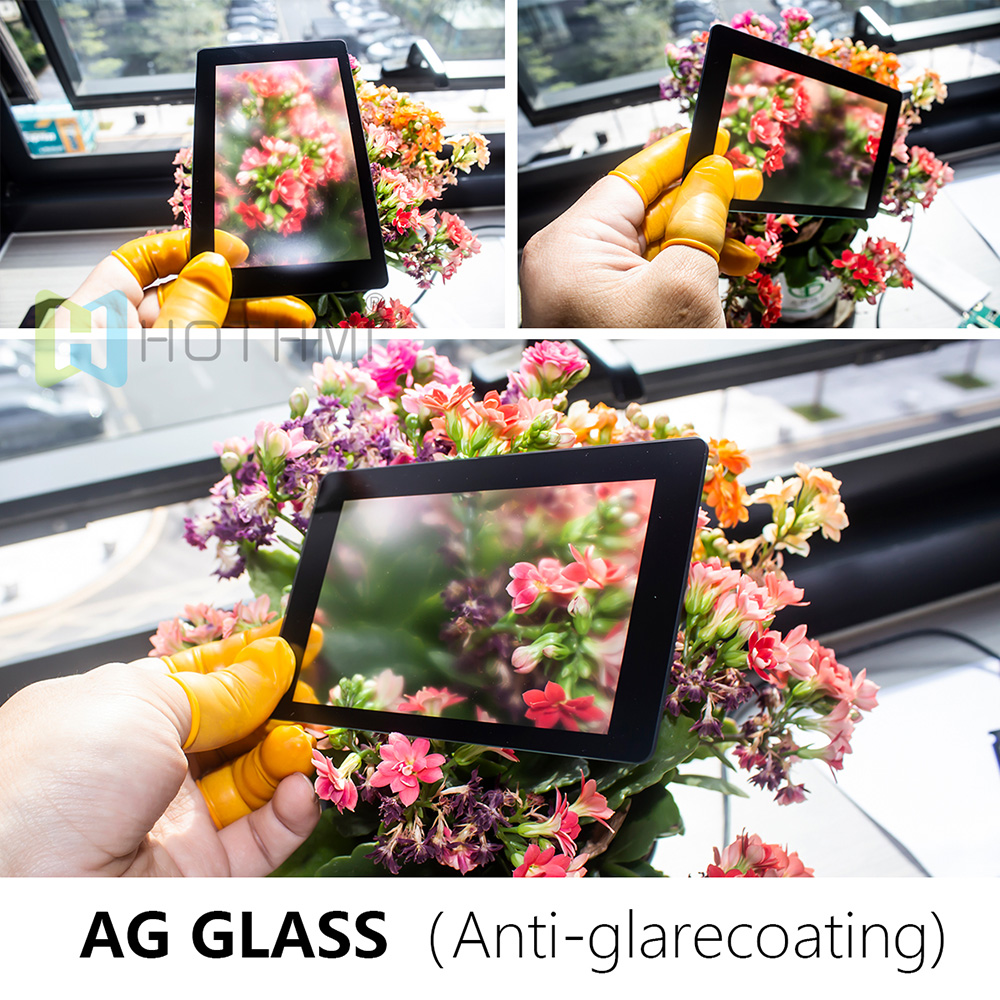
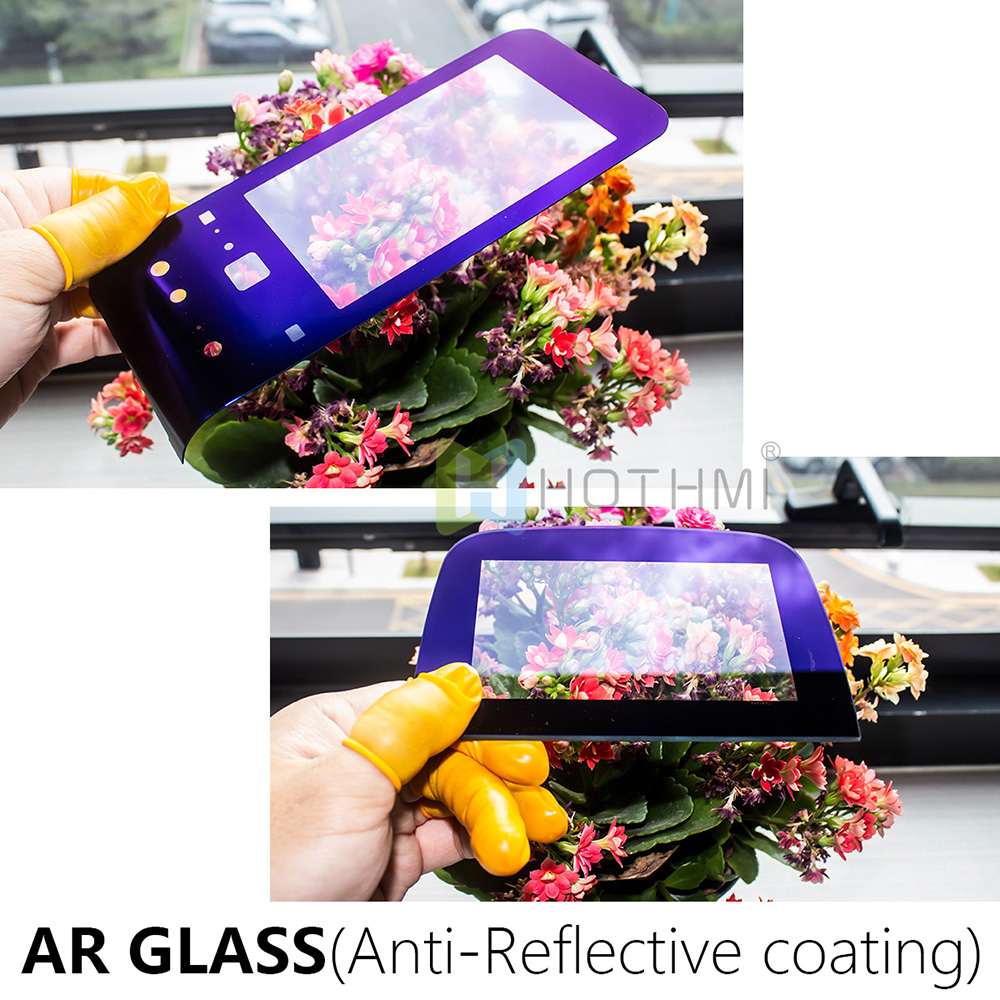
We offer 3A surface treatments (Anti-glare, Anti-fingerprint, Anti-reflection),To improve the viewing experience on your display.
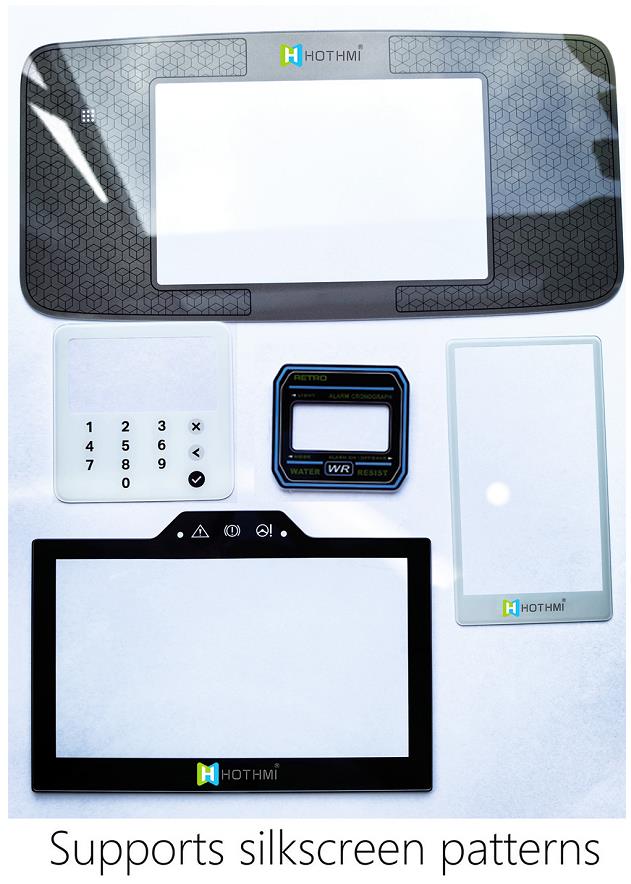
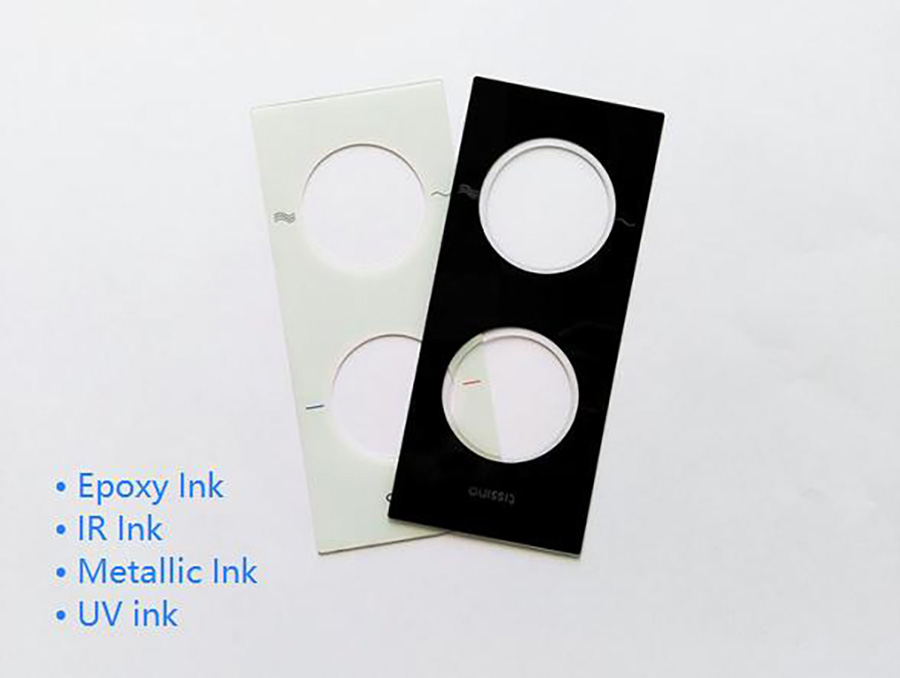
You can silkscreen icons, logos, and other designs onto the customized touch panel to enhance the product's aesthetics.
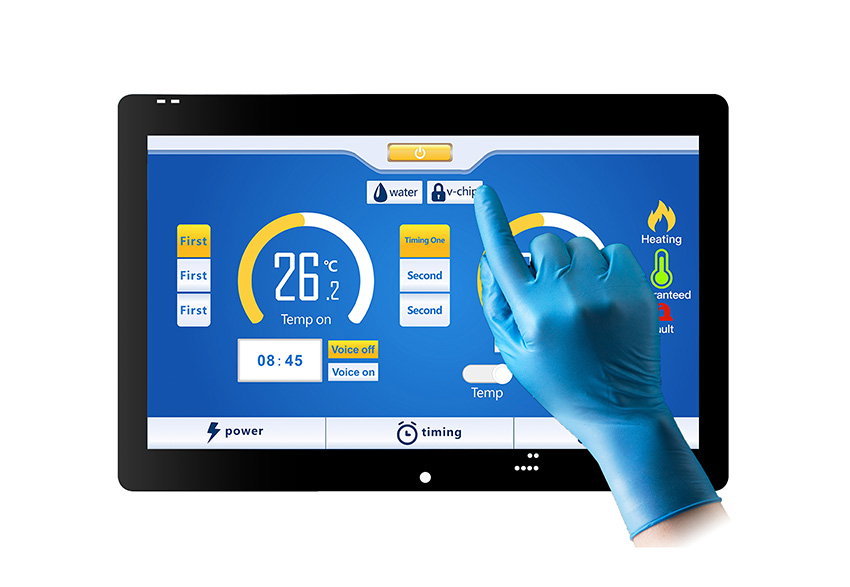
Our custom touch panel solutions are engineered to deliver exceptional performance even when operated with gloves. Leveraging advanced projected capacitive (PCAP) technology with high-sensitivity drivers, our panels are fine-tuned to detect touch through various insulating materials. Whether users are wearing standard cotton work gloves for industrial maintenance or thin hygienic rubber gloves for medical or food preparation environments, the touch sensitivity remains uncompromised. By adjusting the signal-to-noise ratio and employing sophisticated algorithm filtering, we ensure reliable, multi-touch gesture recognition without the need for bare-skin contact. This technological customization enhances safety and efficiency in logistics, cold storage, and laboratory settings where glove adherence is mandatory.
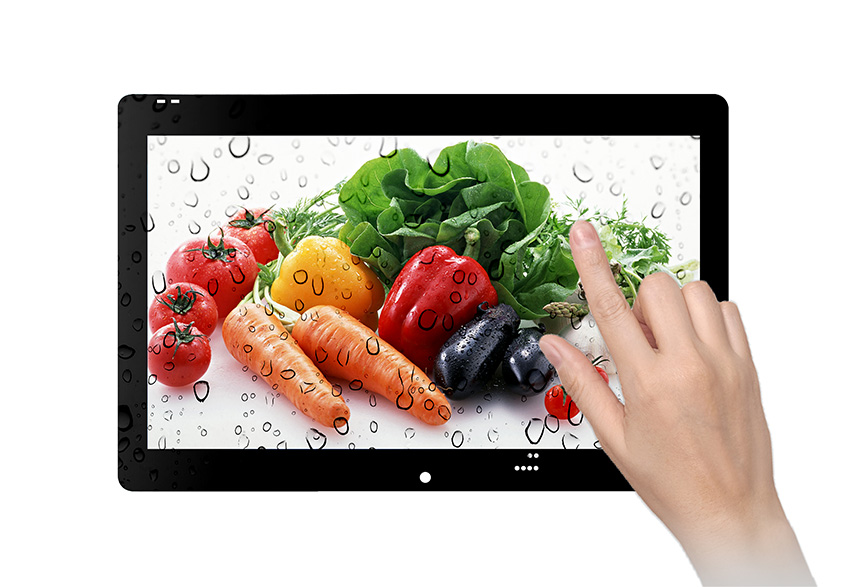
We specialize in the development of custom touch panel solutions designed for reliable operation in submerged or high-moisture environments. By recalibrating the mutual capacitance sensing technology and applying advanced waterproof coatings, our custom touch panel can accurately interpret touch inputs underwater, where standard capacitive screens fail due to water's conductive properties. These custom solutions are engineered to handle freshwater and seawater, ensuring consistent performance for marine navigation systems, underwater robotics control interfaces, or poolside equipment. With robust IP68-rated sealing and firmware-level noise filtering to ignore false triggers from water droplets, our underwater touch panels deliver precise control and durability in the most demanding aquatic conditions.
Click the video for a more intuitive look at the touchscreen's performance under aquatic conditions: Underwater Touchscreen Performance Test.
Optical Bonding :Optical bonding is an advanced integration technology for display modules, and it is the most common method used for a custom touch panel. Its core principle lies in utilizing highly transparent optical adhesives—primarily categorized into OCA (Optical Clear Adhesive) tape and OCR (Optical Clear Resin)—to completely fill the air gap situated between the display panel and the custom touch panel (or protective cover glass), thereby achieving a seamless bond. Specifically, this process employs precision coating or lamination techniques to ensure the uniform distribution of the optical adhesive between the two panel layers; upon curing, it forms a unified optical assembly that is entirely free of air bubbles and impurities. This structural configuration effectively eliminates the air layer inherent in traditional bonding methods, allowing the display panel, the optical adhesive, and the cover glass to merge into a single, unified refractive medium, which is essential for any high-quality custom touch panel.
In terms of structural characteristics, display modules that have undergone optical bonding exhibit exceptional structural integrity and optical consistency. Since the refractive index of the optical adhesive closely matches that of glass, it effectively mitigates light reflection losses occurring at the interfaces between multiple media layers, thereby significantly enhancing the custom touch panel's light transmittance and contrast ratio. Furthermore, the cured adhesive layer possesses a dual nature, offering both elasticity and strong adhesion; this not only provides cushioning protection for the display panel—thereby bolstering the module's impact resistance—but also establishes a fully sealed barrier that prevents the ingress of dust and moisture, ensuring the durability of the custom touch panel. Optical bonding currently stands as the prevailing method for integrating a custom touch panel with display screens, and it represents the technique capable of delivering the superior display performance for end-users.
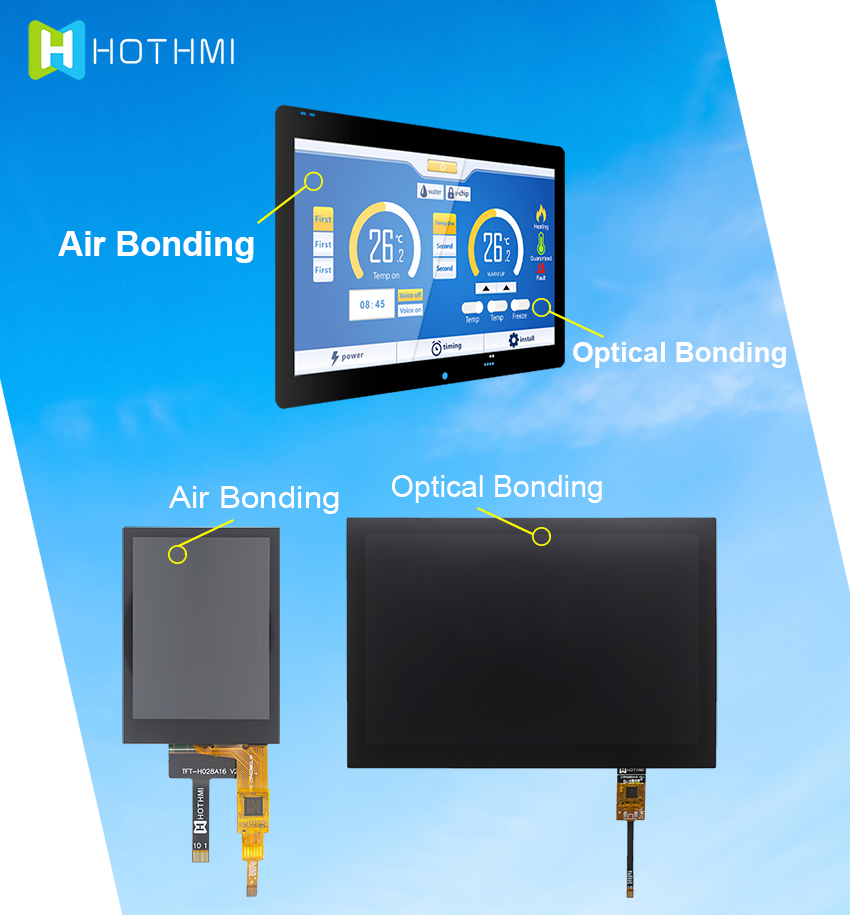
Air Bonding Method:Air bonding is a traditional and widely utilized screen assembly technique, often referred to as "frame bonding." Its core operation involves using double-sided adhesive strips—typically made of acrylic or foam—to bond and secure only the peripheral edges of the display panel to the custom touch panel (or protective glass). These adhesive strips are pre-die-cut into a rectangular, frame-like shape; consequently, following the bonding process, connection is established solely within the border region, while the central viewing area of the panel remains hollow.
When integrating a custom touch panel, this method remains a cost-effective choice for many applications, though it introduces specific optical limitations. From a structural perspective, a distinct air gap exists within the screen module following air bonding. This implies that light emitted from the display panel must sequentially traverse multiple interfaces between media with differing refractive indices—such as glass, the air layer, and the custom touch panel. Since the refractive index of air differs significantly from that of glass, light undergoes a certain degree of reflection and scattering each time it crosses an interface. Although this structure physically integrates the various component layers, it does not constitute a continuous optical entity.
In-cell Touch Technology: In-cell touch technology represents an advanced solution that deeply integrates touch functionality directly into the display panel itself. Its core principle lies in embedding the—traditionally separate—touch sensing layer directly into the pixel array or color filter substrate of a liquid crystal display (LCD). From a manufacturing perspective, this approach eliminates the need for a separate custom touch panel layer or a subsequent lamination process; instead, touch driving and sensing electrodes are fabricated simultaneously on the TFT array substrate by modifying the photolithography masks used within the display panel. These electrodes share the same substrate as the display pixels, utilizing time-division multiplexing or voltage detection methods to capture touch signals without interfering with normal image display. For applications demanding a custom touch panel, this integrated manufacturing method offers exceptional design flexibility and optimized electrical performance.
In terms of structural characteristics, the ultimate goal of In-cell technology is to achieve a seamless fusion where "the display is the touch interface." By eliminating the discrete touch layer and the lamination step, the display module can be engineered to be exceptionally thin and lightweight; furthermore, the absence of additional dielectric interfaces within the light transmission path results in a significant improvement in light transmittance. This makes it an ideal foundation for a custom touch panel requiring high optical clarity and durability. Concurrently, this integrated structure enhances both structural rigidity and resistance to electromagnetic interference, effectively preventing the "water ripple" effect—a visual distortion often observed in traditional laminated screens—from occurring during touch interactions.
Industrial Automation and Human-Machine Interfaces (HMI): A custom touch panel is often the core component of ruggedized solutions designed specifically for the factory floor. These units require scratch resistance, support for glove-enabled touch operation, and the ability to function stably in environments characterized by high electrical noise. (Example: Customized HMIs tailored for Computer Numerical Control [CNC] machine tools).
Medical Equipment:For applications where hygiene and cleanliness are paramount, a custom touch panel can be engineered to meet stringent standards. These panels must feature excellent sealing capabilities (facilitating easy cleaning with disinfectants), utilize optical bonding to prevent fogging, and ensure exceptionally high reliability. (Examples: Interactive interfaces for patient monitors or diagnostic equipment).
Smart Home and Building Control:Featuring an aesthetically pleasing and minimalist glass panel design, a custom touch panel allows these solutions to blend seamlessly with modern interior styles. We offer custom-sized solutions tailored to devices such as light switches, thermostats, and building intercom systems.
Commercial & Retail: From self-service kiosks to Point-of-Sale (POS) systems and digital signage, a custom touch panel provides the critical interface for user interaction. These applications require high-brightness displays combined with robust, vandal-resistant durability. (Example: Outdoor ticketing kiosks equipped with anti-glare screens).
Automotive and Marine:A custom touch panel deployed in these sectors must accommodate a wide operating temperature range, feature anti-reflective coatings, and possess exceptional durability—capable of withstanding the rigorous demands of severe vibration and UV exposure.
Step | Phase | Key Activities |
Step 1 | Initial Consultation & Requirement Gathering | • Define end product and use case for your custom touch panel |
Step 2 | Feasibility Study & Technical Proposal | • Engineering team reviews requirements for your custom touch panel |
Step 3 | Design & Engineering (NRE Phase) | • Schematic design tailored to your custom touch panel |
Step 4 | Prototyping & Sampling | • Create first physical samples of your custom touch panel |
Step 5 | Testing & Validation | • Rigorous testing of the custom touch panel under simulated real-world conditions |
Step 6 | Mass Production & Quality Control | • Begin mass production after custom touch panel sample approval |
Step 7 | Logistics & Ongoing Support | • Shipping and inventory management for your custom touch panel |
l l Key Technical Specifications to be Determined for the Project:To ensure that your custom touchscreen precisely meets your requirements, you must clearly define its technical specifications. The following is a practical checklist designed to guide your communication with the manufacturer.
Display:Diagonal Size (inches), Resolution (e.g., 1024x600), Brightness (nits), Viewing Angle, Contrast Ratio.
Touch Functionality: Technology Type (Resistive or Capacitive/PCAP), Number of Multi-touch Points, Touch Accuracy, Cover Glass Thickness (mm), Special Features (e.g., Glove Mode, Water Resistance).
Interface:Electrical connection method (e.g., 40-pin FPC, LVDS, USB, I2C, SPI).
Optical Characteristics: AR (Anti-Reflective) or AG (Anti-Glare) coating, polarizer type, required transmittance.
Environmental Adaptability: Operating temperature range, required IP protection rating (dust and water resistance), and humidity resistance.
Problem Description:Corrosion spots appeared around the edges of the screen, and some touch functions failed. The workshop required multiple rounds of washing and disinfection every day; cleaning fluid seeped into the panel gaps, causing internal circuit shorts. The production line had to be shut down for repairs, resulting in tens of thousands of dollars in losses.
Cause Analysis
l Material mismatch: Standard aluminum alloy could not withstand long term corrosion from mild acidic or alkaline cleaning agents.
l Sealing defects: Although the standard industrial panel was rated as waterproof, the interfaces and the joints between the panel and the enclosure were not specially sealed.
l Structural dead zones: The right angle bezel design allowed liquid to pool, turning the accumulated liquid into a starting point for corrosion.
Solution – How to Avoid Such Pitfalls:A custom touch panel was developed using 304 stainless steel, with targeted improvements:
ü 304 food grade stainless steel was chosen for its corrosion resistance, anti bacterial properties, and compliance with food hygiene standards.
ü A fully sealed design was implemented: waterproof rubber gaskets were added to screws, and triple layer protection was applied at the joints between the panel and the main unit.
ü All I/O ports were routed internally through cables, reducing the number of external openings.
ü A sloped chamfer design replaced the right angle bezel, allowing liquids to drain naturally and preventing residue.
Problem Description
On sunny days, the screen was nearly impossible to see during outdoor operations. Workers had to shield the screen with their hands or move into the shadow of equipment to operate. Compounding the issue, touch functionality failed completely when wearing gloves—forcing operators to remove gloves during winter work, which compromised both efficiency and safety.
Cause Analysis:
l Insufficient Brightness: Standard screens offered only 300–500 nits of brightness, resulting in severely inadequate contrast under direct outdoor sunlight.
l Severe Reflection: The standard screens lacked anti-reflective treatment, causing the glass surface to create a mirror-like reflection.
l Touch Limitations: The capacitive screens were not designed for glove use, as insulated gloves disrupted the electric field sensing.
ü Solution & Key Considerations
A custom touch panel was developed specifically for extreme outdoor environments, incorporating the following optimizations:
Brightness increased to over 1000 nits, combined with a high-contrast display solution.
ü Anti-glare coating and anti-reflective film added to reduce surface reflectivity.
ü A touch controller with glove-mode support (such as EETI or Goodix solutions) was selected to enhance penetration sensitivity.
ü Glass hardness upgraded to 9H or above, with reinforced edge structures to withstand impacts and abrasion in mining conditions.
Problem:A leading touch panel manufacturer invested NT$15 billion in 2012 to expand production capacity for touch-enabled notebook panels, forming deep partnerships with major international software and hardware companies. Two years later, the company posted the largest quarterly loss in the history of the local stock market—NT$19.4 billion—and was forced to spin off its subsidiaries to survive.
Reason :
l Market misjudgment: The penetration rate of touch-enabled notebooks was only 10% in 2012 and rose to just 14% by 2015. Consumers had not yet formed the habit of using their fingers to interact with notebook screens.
l Technological commoditization: Starting in 2013, more than 200 touch panel suppliers flooded the market. A mainland China competitor aggressively competed on price, and the company’s technological edge was not effectively perceived by customers.
l Over-reliance without differentiation: A well-known consumer electronics founder once publicly remarked that, from the company’s perspective, this manufacturer and its low-price competitor were essentially the same brand.
ü How to Avoid It
If the company had adopted a differentiated custom touch panel strategy instead of blindly expanding capacity for standardized products:
ü Rather than producing "one-size-fits-all" touch notebook panels, it could have developed dedicated custom touch panel solutions for specific verticals—such as industrial design, medical imaging, and professional drawing applications.
ü By leveraging specialized technologies such as optical bonding and custom coatings, it could have created differentiated value that customers could truly perceive.
ü A "customized on demand, small-batch validation" model could have been adopted to avoid the risk of massive upfront capacity investments.
ü Instead of remaining a mere touch sensor supplier, the company could have evolved into an "opto-mechatronic integrator," offering one-stop custom touch panel solutions that integrate displays, fingerprint sensors, and modules.
Problem DescriptionA leading automotive parts supplier developed a digital touch interface for a high-end electric vehicle, integrated into the dashboard and center console. During initial prototype testing, several touch buttons failed completely, while the backlight colors were inconsistent—indicators that should have appeared white turned yellow. As a result, the entire batch was rejected by the automaker.
Reason Analysis
l Process Defect: The custom touch panel utilized a "sandwich structure" combining a top glass layer, an intermediate electronic layer, and a bottom button layer through an overmolding process. Poor process control led to excessive pressure on the electronic components, causing them to fail.
l Uneven Injection Molding: The twelve button components varied in volume from 0.38cc to 1.15cc. The conventional hot runner system was unable to balance such small volume differences, resulting in uneven pressure distribution across the custom touch panel.
l Timing Issues: Improper control of residence time and injection sequencing subsequently led to cracks and material damage.
ü Solution:The solution involved redesigning the automotive-grade custom touch panel and optimizing the manufacturing process through the following measures:
ü Adopted multi-shot molding technology, completing the main cover and button layers within a single mold to ensure precision and alignment.
ü Introduced iFLOW (iFLOW manifold) technology, which eliminates the constraints of traditional straight flow channels and allows optimized injection pressure for components of varying volumes.
ü Utilized servo-driven auxiliary injection units, delivering significantly higher injection precision and repeatability compared to conventional hydraulic machines.
ü Added comprehensive environmental simulation testing—including temperature cycling, vibration testing, and UV aging tests—to ensure long-term reliability of the custom touch panel.
Problem Description:A smart home brand was developing a high end smart toilet and chose a 5 mm tempered glass panel to enhance the premium feel. During testing, however, the touch buttons responded sluggishly. While short presses barely worked, the long-press flush function failed completely. The project reached a deadlock and faced a high risk of delay.
Reason Analysis
l Excessive thickness: Standard touch controllers experience a sharp drop in sensitivity when the dielectric thickness exceeds 3 mm; 5 mm is near the physical limit.
l Signal attenuation: Glass, as an insulating layer, significantly weakens the electric field coupling between the finger and the sensor.
l Noise interference: Simply increasing sensitivity introduces environmental noise, leading to false triggers.
ü Solution – How to Avoid the Pitfall:Instead of using a standard off the shelf module, the brand adopted a custom touch panel control solution tailored to the specific requirements:
ü A single chip solution with an integrated touch sensing peripheral was selected, leaving ample room for custom algorithm development.
ü The touch detection and filtering algorithms were rewritten to optimize adaptive baseline tracking and dynamic threshold adjustment.
ü The system was specifically tuned for the 5.1 mm glass panel; after tuning, the touch response was sensitive and the long-press function operated reliably.
ü A serial debug interface was reserved to facilitate future adaptation to different materials (wood, ceramic, etc.).
Result:The customized custom touch panel successfully overcame the 5 mm thick glass limitation. Long-press functionality became stable and reliable. The product launched on schedule and became a benchmark in the high end smart toilet market.
Deciding to integrate a custom touch panel into your product is a strategic move. It not only significantly enhances user experience and strengthens your brand image but also ensures long-term product reliability. In contrast, off the shelf general solutions simply cannot deliver the same level of integration, superior performance, or supply chain security. Whether you are in industrial automation, medical healthcare, or commercial retail, a custom touch panel is the key to unlocking your product's full potential.
However, technology is only half the battle. Choosing the right manufacturing partner is just as critical as selecting the right components. A partner with deep engineering expertise, a rigorous quality control system, and a commitment to close collaboration can transform your vision into a market leading reality. Hot Display is a manufacturer with 21 years of experience in display and touch panel solutions. By partnering with us—a company backed by extensive experience—you gain access to specialized knowledge in material selection, sensor design, and production processes. This ensures that your custom touch panel is not only optimized for manufacturability but also achieves the ideal balance between cost and performance.
Ready to discuss your custom touch panel project? Contact our engineering team today for a free consultation and feasibility analysis. Let us help you build the future of human machine interaction together.



China Custom Industrial TFT LCD Display Manufacturer & Global LCD Supplier
Address:Building N3, Tian'an Digital Industry Park, Fenggang Town, Dongguan City, Guangdong Province, China