2.0-inch Smart TFT LCD Display Module 320x240 UART interface Now Available!
 English
 简体中文
简体中文
 日本語
日本語 Deutsch
 한국어
한국어 Русский язык
 Español
 Français


Unlike standard 5-inch bare TFT screens, HOTDISPLAY’s HTM-H050A1-RGB-A01 does not simply provide an LCD panel and FPC interface; instead, it features an integrated module design comprising a TFT screen, a PCB control board, and a stainless steel frame.
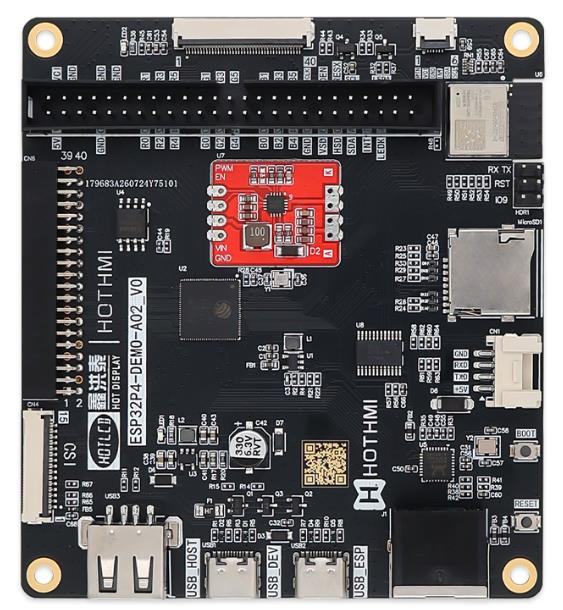
As a professional Chinese TFT LCD manufacturer, we provide complete TFT LCD development boards, TFT LCD control boards, and LCD driver boards designed for seamless display integration. Our boards are compatible with ESP32 display screens and other mainstream platforms, enabling fast prototyping and reliable performance for embedded GUI, IoT, and industrial HMI applications.

The HOTDISPLAY H080D16 series offers options with either MIPI or LVDS interfaces. It features an 8-inch, 1920×1200 high-definition IPS display panel combined with high-brightness (1500 cd/m²) backlight technology, ensuring clear and stable display performance even in direct sunlight.
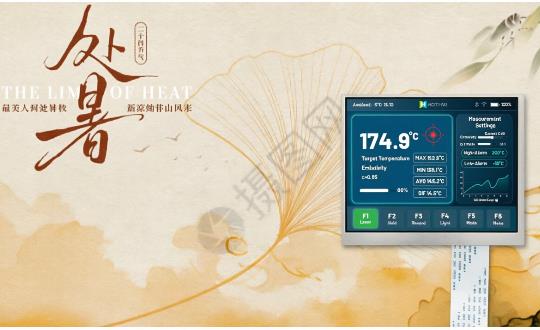
HOTDISPLAY's 5.7-inch TFT LCD screen features an ultra-wide operating temperature range of -30℃ to 80℃, IPS full-viewing angle technology, 1000cd/m² high brightness backlight (sunlight readable), 8KV electrostatic discharge protection, 640×480 resolution, and RGB interface. This product has reliable applications in industrial control, medical equipment, outdoor monitoring, and other fields.
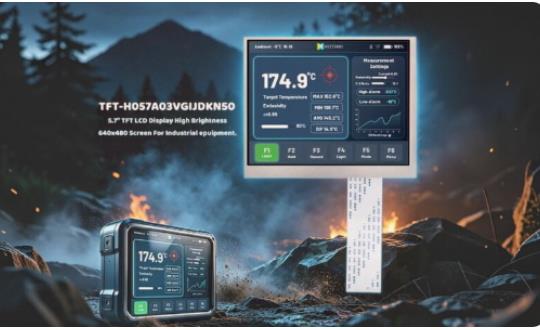
HOTDISPLAY's TFT-H057A03VGIJDKN50 5.7-inch industrial-grade TFT LCD module is designed for high-reliability applications. Featuring a 640×480 resolution, 24-bit RGB interface, IPS full-view LCD technology, and a 1000cd/m² ultra-high brightness LED backlight, this product maintains clear readability even in bright outdoor environments, providing a high-performance display solution for industrial equipment, human-machine interfaces (HMIs), medical instruments, and smart terminals.
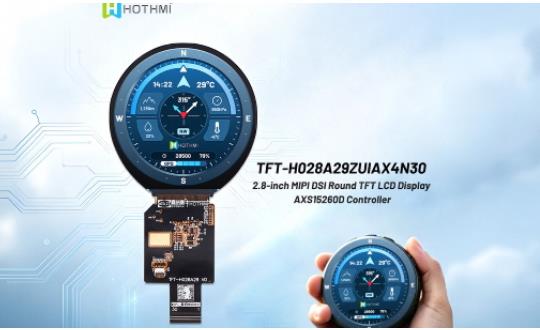
HOTDISPLAY, deeply rooted in the display technology field, has launched the TFT-H028A29ZUIAX4N30 series 2.8-inch In-cell circular MIPI LCD display module, providing a one-stop high-quality solution for small-sized circular display scenarios.

China Custom Industrial TFT LCD Display Manufacturer & Global LCD Supplier
Address:Building N3, Tian'an Digital Industry Park, Fenggang Town, Dongguan City, Guangdong Province, China