 8-inch 800x600 TFT LCD Display With RGB Interface IPS Panel Now Available!
 English
 简体中文
简体中文
 日本語
日本語 Deutsch
 한국어
한국어 Русский язык
 Español
 Français




The Difference Between an LCD Monitor and an LCD Module
 2026-03-24
 1670
1670


2026-03-24
1670
In the vast landscape of display technology, the terms "LCD Monitor" and "LCD Module" are frequently used interchangeably. However, this casual conflation masks a fundamental distinction in the supply chain. They represent different tiers of production—one a core component, the other a complete solution—with significant differences in technical architecture, functionality, and application. As display technology permeates every facet of modern life, from consumer electronics and industrial control to medical equipment and automotive displays, a precise understanding of these differences is critical for technical design, product selection, and procurement decisions. This article delves into the technical architectures, functional characteristics, and application scenarios of both, with a particular focus on why the LCD Monitor stands out as a superior, integrated solution.
An LCD Module, often abbreviated as LCM, is the core component assembly of a liquid crystal display product. It is a "semi-finished" product, typically comprising the LCD panel, driver circuits, backlight unit, and basic connectors. While it can display an image when powered by a dedicated controller, it cannot function independently. In the display industry supply chain, the LCD Module occupies the midstream position, bridging upstream panel manufacturing and downstream final product assembly.
Technically, an LCD Module represents the critical integration of the display's core functionality. It integrates the TFT array (for active-matrix LCDs) or STN matrix (for passive-matrix LCDs) on glass substrates, bonding them with driver ICs using Chip-on-Glass (COG) or Chip-on-Film (COF) processes to achieve high-density electrical connections. However, it lacks the complete interfaces, power management, and mechanical structures required for direct user interaction.
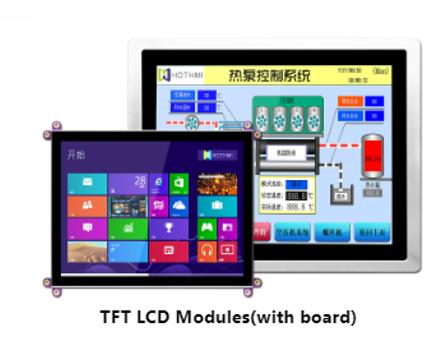
An LCD Monitor is a finished, end-user-oriented display device. It integrates an LCD Module with a power system, signal processing circuits, mechanical structure, and user interface into a single, plug-and-play product. In the supply chain, a LCD Monitor manufacturer takes a basic LCD Module and adds significant value—typically 40-60% of the final product's value—through electronic system integration, structural design, software development, and rigorous quality control.
A modern LCD Monitor is far more than a window for displaying images; it is a sophisticated information processing terminal. It handles signal conversion, image optimization, user interaction, and system protection. This fundamental difference in integration level is the primary reason for the LCD Monitor's significant advantages in usability, reliability, and feature richness.
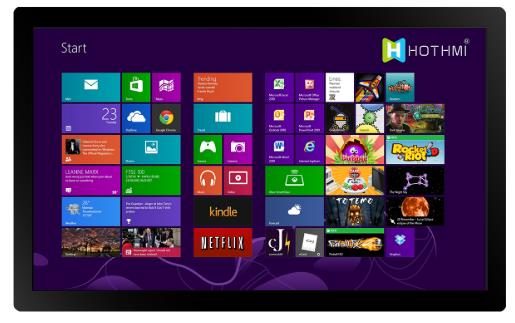
A typical LCD Module is composed of several key layers, each crucial for its operation:
Liquid Crystal Cell Layer: Formed by two glass substrates sandwiching the liquid crystal material. Transparent electrodes are etched onto the inner surfaces, creating an array of controllable light valves.
Polarizer System: Two layers of polarizing film (upper and lower) define the fundamental optical properties of the display.
Driver Circuits: Includes source and gate driver ICs that convert digital signals into the precise control voltages required by each liquid crystal cell.
Backlight Unit: Composed of an LED light source, a light guide plate, a reflective sheet, and optical films to provide a uniform source of illumination.
Flexible Printed Circuit (FPC): Connected to the panel via Anisotropic Conductive Film (ACF), this serves as the input channel for signals and power.
The interfaces on an LCD Module are typically basic, such as RGB parallel interfaces, LVDS (Low-Voltage Differential Signaling), or the more modern MIPI interfaces. These require an external controller to provide specific timing signals for proper operation.
In contrast, an LCD Monitor builds a complete system architecture around the core module:
Power Management System: This includes AC-DC conversion, multiple DC-DC output stages, over-voltage/over-current protection circuits, and energy-saving control logic.
Signal Processing Chain:
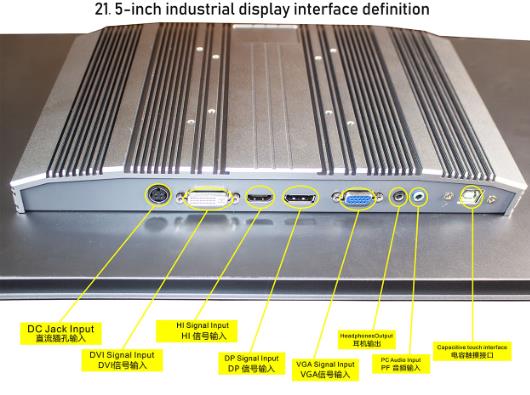
Input Interfaces: Multiple standard connectors like HDMI, DisplayPort, DVI, and VGA.
Main Controller (Scaler): Handles signal decoding, format conversion, and color space mapping.
Timing Controller (T-CON): Generates the precise timing signals required by the LCD Module.
Image Processing Engine: Executes advanced algorithms like super-resolution, dynamic contrast optimization, and motion compensation.
User Interaction System:
Physical buttons or touch controls.
On-Screen Display (OSD) menu system for user settings.
Smart sensors (ambient light sensors, proximity sensors).
Mechanical and Thermal Systems:
Structural frame and enclosure.
Adjustable stands (tilt, swivel, height, pivot).
Efficient heat dissipation design.
Audio System (Optional): Integrated speakers and audio processing circuitry.
This multi-layered integration allows a LCD Monitor to directly accept input from a wide variety of source devices and provide an intuitive, user-friendly control interface.
The most apparent advantage of a LCD Monitor is its exceptional out-of-box experience. Modern monitors utilize EDID (Extended Display Identification Data) technology to automatically negotiate the optimal resolution, refresh rate, and color format with the connected source device. This greatly simplifies setup. The inclusion of multiple input interfaces ensures broad compatibility with both legacy and new devices, eliminating user frustration over connector mismatches.
While the LCD Module sets the baseline performance, a LCD Monitor's post-processing capabilities are crucial for enhancing the final image:
Precision Color Management: High-end LCD Monitor models incorporate built-in calibration engines, supporting multiple color spaces like sRGB, Adobe RGB, and DCI-P3. Professional models often come with factory calibration reports, achieving a Delta E (ΔE) of less than 2.
Motion Handling Optimization: Through frame interpolation algorithms, variable refresh rate technologies (such as AMD FreeSync and NVIDIA G-SYNC), and overclocking capabilities, a LCD Monitor significantly improves the smoothness of fast-moving content.
Advanced Local Dimming: Full-Array Local Dimming (FALD) LCD Monitors can divide the backlight into hundreds of independently controlled zones, achieving dynamic contrast ratios that can rival OLED displays.
Dedicated Preset Modes: Specialized picture modes optimized for specific applications, such as sRGB mode for web design, CAD/CAM mode for engineering, or DICOM mode for medical imaging.
Modern LCD Monitors have made significant strides in user experience:
Ergonomic Stands: VESA-compliant stands offer extensive adjustability—height, tilt, swivel, and pivot—allowing users to find the most comfortable viewing position, reducing neck and eye strain.
Eye Comfort Technologies: Flicker-free technology (using DC dimming) eliminates screen flicker, while low blue light modes reduce harmful blue light (415-455nm). Ambient light sensors can automatically adjust screen brightness to match the environment.
Multi-Tasking Capabilities: Features like Picture-by-Picture (PBP) and Picture-in-Picture (PIP) allow a single LCD Monitor to display content from multiple source devices simultaneously.
Remote Management: Enterprise-grade LCD Monitors support protocols like DDC/CI and MCCS, enabling IT departments to manage settings, monitor status, and push configurations across a fleet of monitors over a network.
As a finished product, a LCD Monitor offers significant system-level advantages in reliability:
Optimized Thermal Design: Integrated heat sinks and airflow management ensure all components, including the backlight, operate within safe temperature ranges for extended periods.
Robust Power Protection: Built-in surge protection, over-voltage, and over-current circuits provide industrial-grade protection against electrical anomalies.
Pixel Defect Guarantees: LCD Monitor manufacturers often provide stricter pixel defect policies (e.g., zero bright pixel guarantees), whereas LCD Module standards are typically more lenient.
Comprehensive After-Sales Support: This includes warranty service, technical support, driver downloads, and firmware updates directly from the LCD Monitor brand.
The LCD Module remains the ideal choice for specific scenarios:
Deeply Integrated Products: In industrial control equipment, medical instruments, and measurement devices where the display must be deeply integrated with the main host system.
Mass Customization: Applications like automotive dashboards and smart home appliance panels that require special shapes, sizes, or optical bonding.
Cost-Sensitive, High-Volume Products: For large production runs, sourcing modules and designing simplified peripheral circuits can significantly reduce Bill of Materials (BOM) costs.
Space-Constrained Applications: Devices like head-mounted displays or miniature projectors where the bulk of a full LCD Monitor is not feasible.
For the vast majority of use cases, a LCD Monitor provides the superior solution:
Office and Commercial Display: Plug-and-play simplicity, support for multiple input sources, and ergonomic designs make it ideal.
Professional Content Creation: High color accuracy, resolution, and wide color gamut coverage meet the stringent demands of photographers, videographers, and graphic designers.
Gaming and Entertainment: High refresh rates, low latency, and adaptive sync technologies provide an immersive and competitive edge.
Financial Trading and Security Centers: Multi-screen setups, centralized management, and reliability are key benefits of a LCD Monitor.
Education and Corporate Training: Easy installation, intuitive operation, and features like integrated audio and touch simplify deployment in classrooms and meeting rooms.
When deciding between an LCD Module and an LCD Monitor, consider the following:
Integration Level: Does the product require the display to be a physically and electronically integrated part of a larger device?
Development Resources: Is there an in-house team of electrical and mechanical engineers for secondary development?
Production Volume: For small to medium volumes, a LCD Monitor is often more economical; for very high volumes, a module can offer cost advantages.
Product Differentiation: Are special shapes, sizes, or optical characteristics required for a unique product design?
Time-to-Market: Using an LCD Monitor dramatically shortens the product development cycle.
Lifecycle Support: LCD Monitor manufacturers typically provide more stable and predictable product lifecycles and long-term support.
The LCD Monitor and the LCD Module represent distinct stages in the display product lifecycle, each with its own technical merits and application advantages. For the vast majority of end-users and application scenarios, the LCD Monitor stands out as the superior solution, offering unparalleled completeness, ease of use, system-level reliability, and optimized visual performance. It eliminates the complexity of system integration and delivers a refined user experience through professional-grade image processing.
However, the LCD Module retains its indispensable value in applications requiring high levels of customization, extreme cost sensitivity, or strict space constraints. Understanding the fundamental differences between a component and a complete LCD Monitor is key to making the most appropriate technology choice, allowing one to balance performance, cost, development time, and user experience effectively. As display technology continues to evolve, future products will likely further integrate the strengths of both, leading to even more flexible, powerful, and intelligent visual solutions across all industries.



China Custom Industrial TFT LCD Display Manufacturer & Global LCD Supplier
Address:Building N3, Tian'an Digital Industry Park, Fenggang Town, Dongguan City, Guangdong Province, China